At present, the number of smart homes in the world is estimated to have exceeded 200 million, and it is expected to exceed 500 million in the next few years. It is only through increasingly digital and sophisticated devices that houses can be made smart. However, even if a smart device is "off," it requires power, because even standby mode requires an immediate response to user input (for example, via voice control) or to provide new information about the smart home or network. At the same time, there are many situations where a person is not present and the device does not need to operate in standby mode at all, thus consuming energy -- mainly when no one is present. To solve this problem and meet the requirements of digitization and energy efficiency, the MMW body sensing module uses some interesting semiconductor solutions, one of which is the 24GHz MMW radar sensor, which can be applied to almost any smart home device. Radar sensors are very sensitive and can detect if someone is present and if the device needs to be ready - a bit like a screen saver, which will stop the PC monitor for a while without mouse or keyboard input and immediately reactivate it upon new input. Through this reliable presence and non-presence detection, the millimeter-wave radar human body induction module can realize the real energy saving of intelligent devices. Almost three-quarters own at least one smart home device, according to a 2023 survey of 5,000 respondents aged 18 to 60 in Germany.
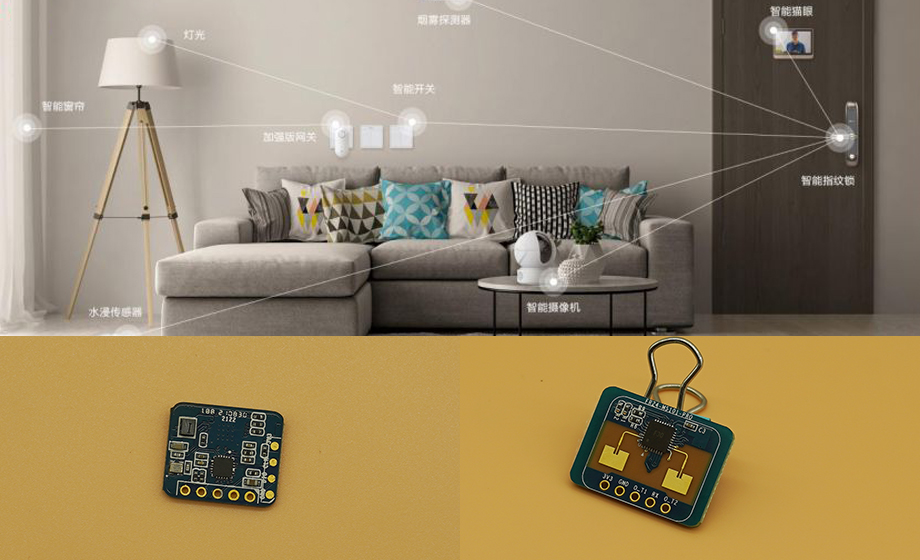
In the United States, the numbers are similar, while in China, the percentage of smart home device users is as high as 90 percent. These devices are as diverse as their applications: they include lighting, security, consumer electronics TVS, laptops and speakers, kitchen appliances and air conditioning. But all these devices increase the demand for energy, especially when energy costs rise and customers think more about energy-saving, sustainable and environmentally friendly devices. In addition, it can reduce the strain on the grid infrastructure. The number of smart devices in American homes is growing rapidly. Rather than setting the thermostat, smart speakers, digital assistants and more in normal standby mode, a better way to reduce energy consumption is to put it in "deep sleep mode" when no one is around. For some devices, this can save a few watts or a fraction. But there are also some special applications that can even exceed 100W, such as TVS, laptops, sound systems and air conditioners. Using the millimeter wave radar human body induction module, can perceive the presence or movement of personnel and can identify the trajectory tracking of multiple people; If no one is there, the smart device can automatically switch to sleep mode. Depending on the sensor and implementation, the radar module itself consumes only a few milliwatts, with a large power consumption of 0.1W, apparently less than the energy requirements of many electronic devices in "on" or standard standby mode. To save energy, devices had to be reinvented in power-hungry standby mode. Keep the device active or standby only when you really need it. This is what we do today in the "non-intelligent" home. When we enter a room, we turn on the lights or manually turn on the air conditioner only when the room is too hot. Still, in many devices, many energy-saving features are not implemented or are disabled by users because activating wake up is too cumbersome or takes too long.
But a new intelligent approach could be the answer to many questions: millimeter-wave radar body sensing modules that detect the movement of multiple people can wake up and run when needed, rather than automatically turning off when needed. For example, only the human state security system can be turned on, and the monitor is always turned on. The smart thermostat can be turned off by default and only the radar detection module is activated. Once the radar detects movement in the room, the thermostat will be activated to update the data status of the house and display weather data. This concept of presence detection can be deployed in many other smart home devices. In addition, the reverse principle of vacancy detection can be applied to provide greater energy saving potential. In this case, devices such as TVS, speakers, smart lights and air conditioners can be turned off if no movement is detected in the room for a period of time. This significantly reduces power consumption. Since vacancy detection does not activate the device immediately, but ceases to be used when no one shows up for a period of time, the MMW radar body sensing module itself can remain stopped and be checked every few seconds or minutes. Therefore, this sensor module can save a lot of energy for the whole system, while consuming less itself. Buildings equipped with HVAC systems can benefit from this principle, since most of the energy is wasted on heating and cooling even when no one is present. To make matters worse, in many cases, these devices operate frequently and for long periods of time. Real intelligence would be to stop using these systems once the area is empty for a while. The feature is gaining popularity in lighting systems, but not yet in air conditioners and other devices such as monitors, kitchen appliances, computers, speakers and sound systems. Users can also benefit from vacancy detection in other applications, such as television. The millimeter-wave radar body sensing module switches the TV to sleep mode when no one is nearby for a specified period of time. This not only saves energy, but also extends the life of the display.
Radar sensor is a good choice for low power smart home. In all the motion test solutions available, the radar sensor has high sensitivity even for small movements, some of which are even invisible. PIR sensors cannot compete in terms of sensitivity. In addition, radar does not rely on human heat as PIR sensors do because it is an active sensing technology. This ensures that people can be detected even if they barely move. But one of the great advantages of millimeter-wave radar is that it can be detected through non-conductive materials. Infrared, ultrasonic, camera and other image-based sensors must be turned on in the case, but radar sensors can be completely hidden inside the device. As a result, you don't have to compromise on product design, and you avoid additional manufacturing steps and the associated costs of modifying the case. Another possibility is camera-based motion testing, such as cameras, televisions, laptops and other devices that already have image sensors. The power consumption of the image system is very high. In addition, they require good ambient light and image processing to detect motion in the video, further increasing power consumption. In addition, privacy is a big consideration.