I. Introduction
In the wave of intelligent technology, human sensor radar sensor as the "eyes" of intelligent equipment and environment interaction, playing an increasingly important role. From smart homes to autonomous driving, from security monitoring to industrial automation, its applications are everywhere. However, just like any advanced technology products, human sensor radar sensors also face many interference challenges in practical applications. Understanding these interference factors is critical to improving sensor performance, optimizing system design, and ensuring stable operation.
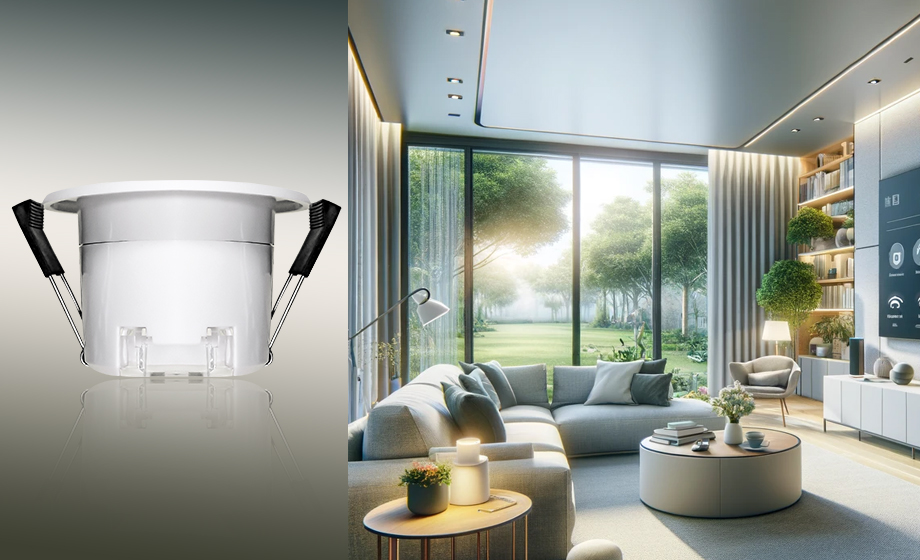
Two, the human body sensor radar sensor working principle
Radar sensors work by emitting high-frequency electromagnetic waves (radar waves) and receiving signals that these waves reflect back from a target object, such as a human body. Inside the sensor is an oscillator, which generates a steady radar wave, which is then transmitted through the antenna. When a radar wave encounters a human body or other object, part of the wave is reflected back and picked up by the sensor. The received signal is processed by the internal circuit to extract information about the target, such as distance, speed, direction, etc.
This working principle allows the sensor to detect the presence and motion of the human body without physical contact, thus enabling support for a variety of intelligent applications. However, it is precisely this working principle that makes the sensor vulnerable to various interference factors.
3. Analysis of common interference factors
1. Electromagnetic interference
Electromagnetic interference is one of the common interference sources of human sensor radar sensor. In modern society, we live in an environment full of electromagnetic waves, from radio broadcasting, mobile phone signals to microwave ovens, WiFi, etc., all kinds of devices are constantly generating electromagnetic waves. These electromagnetic waves interfere with the radar waves emitted by the sensor, which may lead to misjudgment or performance degradation of the sensor.
In order to reduce the impact of electromagnetic interference, we can take some measures, such as selecting low-noise, high-stability electronic components, optimizing circuit layout and shielding design, and rationally arranging the location of sensors and other electronic devices.
2. Environmental factors
Environmental factors are also important factors affecting the performance of human sensor radar sensors. Changes in natural conditions such as temperature, humidity, and air pressure can have an impact on the internal circuits and components of the sensor, resulting in performance instability or drift.
In high temperature environments, the electronic components inside the sensor may fail due to overheating; In humid environments, circuit boards and components may be damp, resulting in short circuit or corrosion; Changes in air pressure can also affect the speed and direction of radar waves.
In order to deal with the interference caused by environmental factors, we can choose sensor models and materials with good environmental adaptability, strengthen waterproof, dustproof and other protective measures, and regularly maintain and calibrate the sensor.
3. Physical interference
Physical interference refers to the change of radar wave propagation path or signal attenuation caused by physical factors such as obstacles and reflectors. For example, in an indoor environment, obstacles such as furniture and walls may block the propagation of radar waves; In outdoor environments, trees, buildings, etc., may also reflect or scatter radar waves.
These physical disturbances can cause the sensor to fail to accurately detect the human body or cause misjudgments. In order to reduce the impact of physical interference, we can optimize the layout and installation location of the sensor, avoiding placing the sensor near obstacles or areas with strong reflective surfaces; At the same time, the anti-interference ability can be improved by adjusting the parameters and algorithms of the sensor.
4. Measures to reduce interference
In view of the above interference factors, we can take a series of measures to reduce its impact on the human sensor radar sensor. First of all, in the design and selection stage, we should choose a sensor with high stability, low noise and strong anti-interference ability; Secondly, in the layout and installation process, we should reasonably plan the position and direction of the sensor to avoid or reduce the role of interfering factors; In addition, we can improve the performance and stability of the sensor by optimizing the circuit design and algorithm; Regular maintenance and calibration of the sensor is also key to ensuring its long-term stable operation.
V. Analysis of actual cases
In order to better understand the influence of interference factors on human sensor radar sensors and the effectiveness of countermeasures, we can select some practical cases for analysis. For example, in the smart home scenario, we can analyze sensor misjudgments due to electromagnetic interference and explore how to reduce interference by optimizing circuit design and shielding measures; In the field of industrial automation, we can study the impact of environmental factors on sensor performance and propose corresponding protection and calibration methods.
Through the analysis of these practical cases, we can more deeply understand the mechanism of interference factors and the actual effect of countermeasures, so as to provide useful reference for practical application.
6. Conclusion and Prospect
Through the in-depth study and analysis of the interference factors of human sensor radar sensor, we can better understand its working principle and performance characteristics, and put forward effective solutions and optimization suggestions. This not only helps to improve the performance stability and reliability of the sensor, but also helps to promote the further development and application of related technologies.
In the future, with the continuous progress of technologies such as the Internet of Things and artificial intelligence and the continuous expansion of application scenarios, human sensor radar sensors will face more challenges and opportunities. Therefore, we need to continue to strengthen the research and exploration of its interference factors, and constantly improve the technical level and application capabilities of sensors to meet the changing market demand and application scenarios.
At the same time, we should also pay attention to the development and application of new technologies, new materials and new processes, and explore the possibility of combining them with human sensor radar sensors to further improve their performance and reliability. In addition, strengthening cross-cooperation and collaborative innovation with other fields is also an important way to promote the development of human sensor radar sensors.
To sum up, it is of great practical significance and application value to study and explore the interference factors of human body sensor radar sensor. By continuously optimizing and improving the design, manufacturing and application technology of sensors, we can promote their greater role in more fields, bringing more convenience and benefits to people's lives and work.